




After graduating from the bow to the 'brains trust' at the back of the boat most remain at the stern, but much can be gained from revisiting the bow says Nikki Henderson
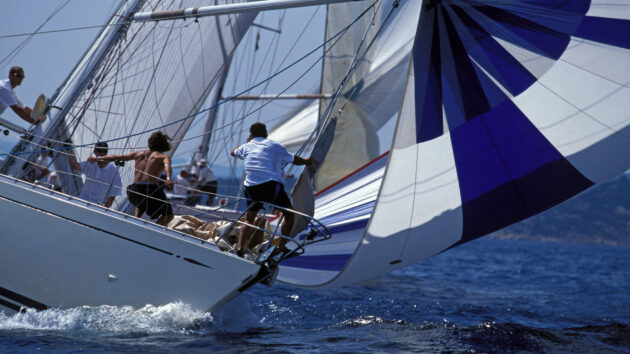
The dreaded question: “We’re short of someone who can run bow. Are you free to fill in for them?” It’s a driver, main trimmer or tactician’s worst nightmare. Because once you finally graduate aft, it’s amazing how quickly you become allergic to the bow and all that comes with it: getting wet, bruised and generally blamed for everything.
Us back-of-the-boat-ers have grown accustomed to control and decision making – something that’s delicately reliant on our heart rate never exceeding 120bpm. So imagine my stress a few weeks ago when I found myself slamming around the foredeck in 25 gusting 30, plugging in a symmetric kite and praying for a clean hoist. After most of my last decade, I knew exactly what they were saying at the back: “She better not have ****ed this up.”
But, it worked! And I was so pleased, I was distracted when the jib dropped immediately after. When eventually I shakingly fed the luff back into the foil with fatigued arms, I was reminded just how humbling bow work is. There is literally not even two seconds spare to breathe a sigh of relief or self-congratulate. Coaching c rew to run bow is not the same as doing it for real in a competitive inshore regatta.
Once the cobwebs were dusted off, I started taking mental notes. General theme: empathy for bow team. More specifically: bow work is a physical venture. It relies on clear communication – course, timings, start-line strategy – relayed promptly. Bow teams need lunch the most but eat it last, so save them a sandwich. And once conditions get over 25 knots they go from hard-working crew to brave hard-working crew.
It’s clear from spending time on the bow more than in any other role that a race crew is co-dependant, which is why any aspiring racer should begin their career at the front.
I read a thought-provoking piece some months ago (by Stuart Greenfield on his Substack First Shift) on the worrying shrinkage of the fully crewed sailing fleets in the Solent. I mirror his concern and finished it feeling a bit hopeless. Let’s be honest, what is going to persuade people to sail with eight other people when they could do it all with just one?
It’s an amazing time to be a double-handed sailor. There’s a growing competitive fleet – most of whom reliably show up to every offshore and inshore regatta start line. It’s not quite a one-design fleet, but there’s seriously close competition with a good number of Sunfast 3600s, Sunfast 3200s and JPKs among others.
Article continues below…
How can you truly assess a sailor’s experience? – Nikki Henderson
I’m fresh back from Chicago, having spent a week coaching an offshore race team from deeply landlocked Denver. So before…
Has technology reduced sailing’s spirit of adventure? – Nikki Henderson
Now that we’ve entered a new chapter in sailing with the proliferation of affordable, high speed internet at sea, is…
And as one of two co-skippers, double-handed sailors get to make calls, do everything, and learn super-fast. They don’t have a crew judging them, rushing them and holding them accountable. So why would you step down the pecking order and return to a fully crewed race team?
Well… I did. And you should. Because it’s a real kick up the backside in the best way. If we don’t sail with different teams, on different boats, in different roles, we get rusty. Just because short-handed sailing means you do everything, doesn’t mean you do everything well.
I’d forgotten how exposing fully crewed sailing is. When short-handing, or leading a full crew, if I get lazy, make an iffy call or bodge a manoeuvre, I’m less likely to be called out. Either my co-skipper is too busy sorting out their own problems, or the chain of command protects me. But step back into a crew role and there’ll be eight pairs of eyes scrutinising you. It’s uncomfortable but also useful. There’s nowhere to hide and that ups your game.
Most of us don’t only sail for glory or competition. We sail for camaraderie and fun. It’s all possible short-handed. But it comes in a bigger, more flavoursome serving of it when you’re part of a larger crew.
Sailing is an easy sport to fall in love with and get obsessed with. One reason is the extraordinary opportunity for personal growth and learning; a pathway towards becoming a better human.
And I’m convinced, partly due to my recent bruising on the bow, that fully crewed racing remains the best way to grow your sailing skill and your character.
So if you’re a short-handed sailor, or you’ve been at the back of the boat for a while, why not commit your winter season to a fully crewed boat? Take a role where someone will notice when you mess up. You’ll help support a part of our sport that badly needs an energy boost. And I’d put money on you returning to your usual role next season more competitive – and maybe even a nicer person – than when you left.
 If you enjoyed this….
Yachting World is the world’s leading magazine for bluewater cruisers and offshore sailors. Every month we have inspirational adventures and practical features to help you realise your sailing dreams.Build your knowledge with a subscription delivered to your door. See our latest offers and save at least 30% off the cover price.
Note: We may earn a commission when you buy through links on our site, at no extra cost to you. This doesn’t affect our editorial independence.