



With Starlink mid-ocean, have we traded the romance of adventure for the safety of assurance? Nikki Henderson explores
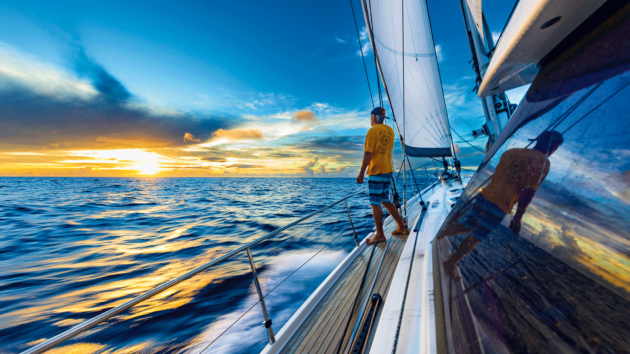
Now that we’ve entered a new chapter in sailing with the proliferation of affordable, high speed internet at sea, is sailing still actually an adventure? Or has the age of ocean exploring come to an end?
A few weeks ago, I was chatting with a friend – a lifelong sailor from Brittany who ran a yacht delivery company in the era before GPS – about ‘the good old days’.
“It was much more fun back then,” he lamented, his eyes twinkling with nostalgia.
“But surely more stressful too?” I pressed him. “Entering somewhere like St Malo without GPS must have been pretty difficult, right?”
But I’d lost him to his dream-state, lusting over the romance of dead reckoning and the freedom of losing sight of shore.
Sailing has changed so much in such a short space of time. Today I can video call home from the middle of the Pacific to share a sunrise. Soon we’ll probably be able to sail aboard a Vendée Globe yacht through a VR headset and experience the race with the skipper. We may be stretching the definition of ‘solo’ sailing, but we’re simultaneously shrinking the sense of remoteness and adventure that once defined life at sea.
More than 3,000 years ago ocean navigation was a sacred art. Polynesian wayfinders navigated the vastness of the South Pacific and Micronesia through an extraordinary connection to the natural world. They used stars, the sun, wind, the waves, and subtler clues: changes in the clouds, bioluminescent patterns, or the flight paths of birds.
Master navigators stood at the bow of their double-hulled canoes and sang stories that described the environment around them. These chants acted as acoustic maps. Every day the stories grew longer, tracking the voyage in detail, until eventually land appeared – finding its way to the boat through song.
Western colonialists in the 1800s considered wayfinding fantastical and dismissed it – thankfully the art secretly passed down and a handful of master navigators still practice the ancient craft today.
Article continues below…
Rallies provide safety, but they don’t replace independent thinking – Nikki Henderson
Fifteen days ago, as I write this from the paradisical shores of French Polynesia, we weighed anchor in the Galapagos…

When is some risk too much risk? Nikki Henderson
I have to confess, I’m very resistant to the daily news drip-feed. The constant drama is overwhelming. I’ve often gone…
Wayfinding is a fantastic metaphor for creativity: the idea that we can summon new possibilities by deeply observing the world around us. A wayfinder calling an unseen island from beyond the horizon is not only beautiful sailing imagery, but perhaps one of the best lessons in seamanship too – observe intently, connect harmoniously and learn to welcome uncertainty rather than battling for control.
Sailors used to be adventurers by default. Whether navigating via constellations, compass or sextant, slipping docklines meant stepping into the unknown. For centuries, we have been finding ways to insulate ourselves from that uncertainty.
Ocean sailing is still difficult. Boats still break. Sailors are still far away from help. Weather is still unpredictable – arguably more so as climate change reshapes weather patterns. But we’re increasingly trading in adventure for assurance. Our technological safety buffer is creating ever more distance between us and the wild natural world.
Today we leave shore with satellite imagery, weather forecasts, AIS, and tracking devices and non-stop comms. There’s literally better internet aboard a yacht mid-Pacific than on the train to London. We can troubleshoot technical issues with the help of experts ashore, hold watch from our bunk, and new mega yachts can even be docked without the captain being on deck at all. Imagining even a coastal passage without GPS feels almost unimaginable.
Perhaps that’s how the 19th century European navigators saw wayfinding. What they once dismissed as madness has become a precious artefact steeped in history and wisdom about what it really means to be a seafarer and adventurer.
We should all learn from that. GPS and Starlink are here to stay, and rightly so. But if we want an adventure, and to preserve the art of seamanship, we need to consciously decide what channels to leave open between ourselves and the wild unpredictable world around us. What artful and wise tools of the past should we hold onto?
Consider just turning on Starlink here and there. Step away from the instruments. Hand steer. Or just spend time deeply observing and connecting to the natural world.
Maybe it really is and always has been that simple.
 If you enjoyed this….
Yachting World is the world’s leading magazine for bluewater cruisers and offshore sailors. Every month we have inspirational adventures and practical features to help you realise your sailing dreams.Build your knowledge with a subscription delivered to your door. See our latest offers and save at least 30% off the cover price.
Note: We may earn a commission when you buy through links on our site, at no extra cost to you. This doesn’t affect our editorial independence.