



No yachting ‘CV’ can tell the whole story about a sailor’s seamanship, but the story they tell you just might
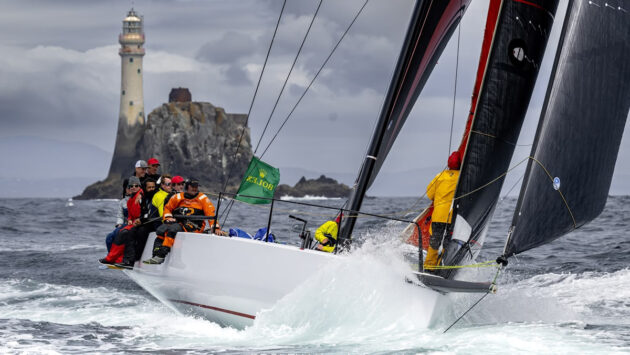
I’m fresh back from Chicago, having spent a week coaching an offshore race team from deeply landlocked Denver. So before I take off my teaching hat, I have a quiz for you.
One sailor has done a Fastnet campaign, including all the qualifiers. Another was a watch leader on an Atlantic crossing. One has done no ocean sailing but owns a 40ft monohull and has spent the last 20 years cruising out of the Hamble. The fourth sailor just passed their Yachtmaster Offshore. They all have about 3,000 miles logged in total. Who is the most experienced sailor? Who rates highest on the seamanship scale?
It struck me in Chicago how sailing expertise – and even more critically seamanship – is extremely hard to quantify. We try to assess sailors using factors that are easy to count: miles, qualifications, years at sea. But do these actually give an accurate picture?
Before this trip, I would have hesitated to call a sailor who has logged 3,000 miles in Lake Michigan an ‘experienced offshore sailor’. Now, I might!
The lake is big enough for land to disappear in good visibility, which is probably the non-technical definition of ‘offshore sailing’. The fleet for the casual weekend race my team were competing in was 70 boats. There was lightning, 180° wind shifts, scary black clouds and all the good weather stuff one expects from offshore racing.
But the most interesting thing was the sailors themselves. They may have been lake sailors, but they took it seriously, learned fast and were ready and willing to suffer just as much as a competitor in the Newport-Bermuda.
It made me think about the ways in which we measure sailing experience. Or really, our lack of a universal system for comparison. Race organisers, insurers and charter companies all need to establish from dry land whether a sailor is sufficiently skilled and safe enough for a particular boat or voyage.
Article continues below…
Has technology reduced sailing’s spirit of adventure? – Nikki Henderson
Now that we’ve entered a new chapter in sailing with the proliferation of affordable, high speed internet at sea, is…
Rallies provide safety, but they don’t replace independent thinking – Nikki Henderson
Fifteen days ago, as I write this from the paradisical shores of French Polynesia, we weighed anchor in the Galapagos…
We have some ‘go-to’ currencies. One is mileage. But 3,000 miles as skipper from here to Lanzarote is a very different education from 3,000 miles sitting on the rail in the Round Britain and Ireland Race.
Another is qualifications. The internationally regarded RYA Yachtmaster Offshore certificate tells us that this sailor was capable of a demanding skill standard on a particular day. But if they passed in, say, 1993 and haven’t sailed since, it doesn’t tell us much about how they would handle the same test today.
Money or legal responsibility forces us to get more detailed. Commercially endorsed Yachtmasters have to revalidate and prove sea service. Insurance underwriters ask about relevant sea time. And charter companies ask for a log of similar boats you’ve skippered.
The aforementioned miles and qualifications can give clues about someone’s ability to trim, navigate, helm, reef, berth, fix things and make sensible decisions.
But character is harder to ascertain. How do they behave when scared or over-tired? Do they take responsibility when they make a mistake? Will they ask for help? Will they wake me up?
New boat owners often ask my advice on how to choose crew for big passages, and this is where the distinction really matters. Would I prefer someone with 10,000 miles as crew or 2,000 as skipper? An Atlantic crossing 10 years ago or two seasons racing double-handed in the Channel? The answers aren’t usually on the CV.
To be able to judge, I really want a story that shows me what kind of sailor they are. What happened when the kite wrapped? What did they do when someone got injured? How did they run the deck while the skipper fixed the alternator? Both what happened and the way they recount it tell me about their skill and their character.
I’m wary of stories where everything was someone else’s fault. I like people who admit they were afraid. I really like sailors with a high capacity for learning and self-evaluation. The best sailors I know don’t accumulate experience for proof of what they know; rather, it makes them more conscious of what they don’t. They tend to be humble, respectful and easy to work with.
So, circling back to my quiz. Who had the most experience? We don’t have enough information to know. But ask them a story about when it all went wrong and what they’d do differently next time and I bet you’d find your answer.
 If you enjoyed this….
Yachting World is the world’s leading magazine for bluewater cruisers and offshore sailors. Every month we have inspirational adventures and practical features to help you realise your sailing dreams.Build your knowledge with a subscription delivered to your door. See our latest offers and save at least 30% off the cover price.
Note: We may earn a commission when you buy through links on our site, at no extra cost to you. This doesn’t affect our editorial independence.