


Find out what it's like onboard an all-girl boat, what they've learned so far, and how they jumped headfirst into the adventure of a lifetime
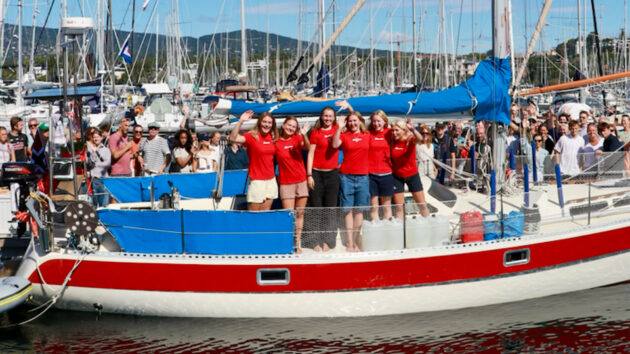
What if instead of going straight into a course or a job after finishing school, you set off to sail around the world with your best friends?
Lisa, Thelma, Eva, Amalie, and Elise, all between 19 and 21, are in a unique position to find out.
Since trading textbooks for topsides, they’ve been living onboard a 37ft, 40-year old boat bought on their own dime.
‘Her name is Fatuhiva, but we call her Fatudiva,’ Thelma says. (The moniker is also the crew’s instagram handle, YouTube channel, and website URL).
‘We’ve really embraced the femininity of it. It’s a beautiful part of who we are as sailors, and a resource.’
We caught up with some of the crew just before they set off across the Pacific to find out how they jumped headfirst into the adventure of a lifetime, what they’ve learned along the way, and what it’s really like being a young woman in sailing today.
Getting off the ground
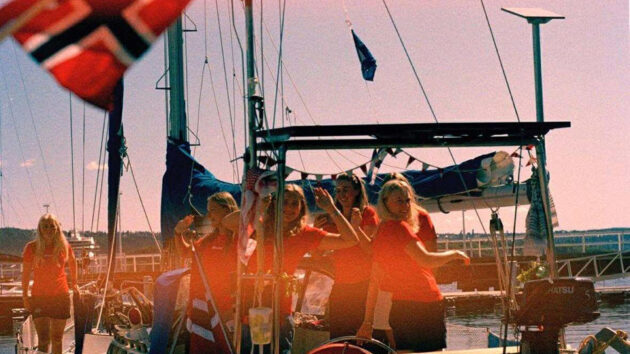
Film from Fatuhiva‘s departure from Oslo in August of 2025. Photo by Fatudiva
The freshly-launched Fatuhiva hit a rough patch right out of the starting gate. Or a rather, a sandbank off of Germany.
After running aground less than a week into the voyage, ‘We had to be rescued by the German Coast Guard. There was a TV crew onboard the rescue boat,’ Eva, Fatuhiva’s captain, recalls. ‘We’re now part of a documentary series, so that was… interesting.’
While the boat was repaired over the next six weeks, three of the crew went sailing on other vessels to get back on the horse.
‘The first thing the guys at the shipyard had told us was that we wouldn’t be able to cross the Atlantic that same year. They told us to go home and wait. We were, like, no way.’
Even encountering a pod of orcas wasn’t enough to put them off. They briefly considered shipping the boat and spoke to other sailors, many of whom said it was too late in the year.
But some advised pressing on anyways.
‘They said, ”Girls, you’re all good. You can do it,’ and that it was just going to be a bit colder. We had a good weather window over the Bay of Biscay. So… we went.’
Though they made it in time, they admit, ‘It was a very rough start.’
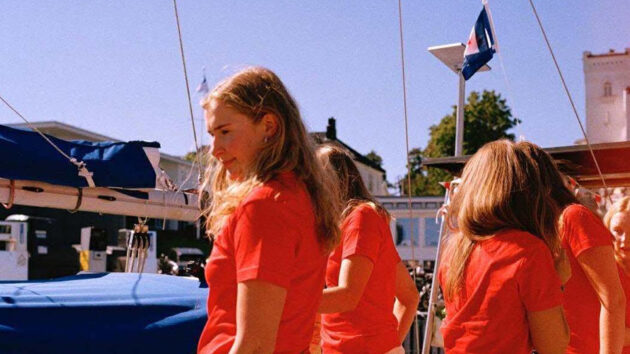
Film from Fatuhiva‘s departure from Oslo in August of 2025. Photo by Fatudiva
After leaving Germany, the Fatudivas sailed towards open ocean via France, then Spain, then Portugal. They stopped in Morocco, Gran Canaria, Tenerife, and Senegal before crossing the Atlantic.
Arriving in Brasil, they poked into the Amazon River, saw pink dolphins, danced at Carnival.
Then on to French Guiana, Suriname, Tobago, Grenada, Aruba, Panama, and safely across the Panama Canal.
‘You hear from other sailors that the canals are not built for sailboats, that there are a lot of accidents. We were kind of nervous, because there’s so much that’s out of your control. But in the end that went well, too,’ Eva says.
Making the dream a reality
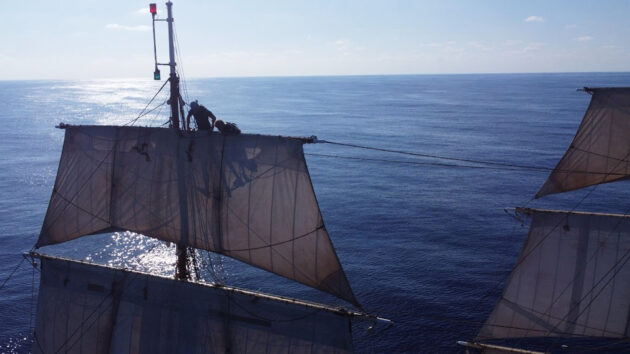
The Fatuhiva crew met during a Sail Training exchange program onboard the tall ship Sørlandet. Photo by Fatudiva
The Fatudivas first met on an exchange program onboard the Sail Training tall ship Sørlandet.
‘We fell in love with this lifestyle, this type of traveling. We decided to do it on our own.’
Once the seed had been planted, ‘I felt possessed by the idea,’ Eva says. ‘I couldn’t think, I couldn’t sleep.’
While they were studying passage planning, most of their friends were going straight into university programs.
‘Especially in Norway, that’s what the government wants you to do. Start studying, so you can get in a job, so you can pay taxes.
But we’re going to work until we’re 70, and we have this opportunity right now. We’re never going to have as few responsibilities again.’
Fatuhiva‘s crew obtained their nautical license while working two jobs each, taking shifts in shoe stores and wine bars, schools and kindergartens.
‘We worked hard to be able to buy the boat ourselves. We wanted it to feel like our project. And we’re here now. We’re stubborn.’
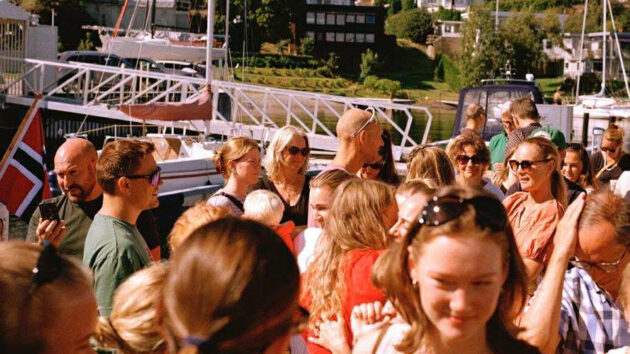
Film from Fatuhiva‘s departure from Oslo in August of 2025. Photo by Fatudiva
Once they had purchased Fatuhiva, a 1985 Hero 114 designed by civil engineer Eivind Amble based on reader input gathered by Norwegian sailing magazine Seilas, the girls began noticing a change in how people reacted to their plan.
‘Before, everyone thought it was just a dream. Once there was a boat they started to believe us. Our parents finally realised we weren’t joking. That we were for real.’
Onboard with the Fatudivas
From their stories and regular video updates, life onboard Fatuhiva seems cozy and well coordinated.
The crew splits tasks, keeps rotas, and assigns repairs according to interest, always making sure that at least two people are working on any one problem.
‘One of the biggest resources that we have is that we always help each other out. You never feel alone, because there’s always five or six heads to help find a solution.’
Being an all-female crew often proves to be an advantage, they explain.
‘So much of sailing depends on building community and communicating well together.’
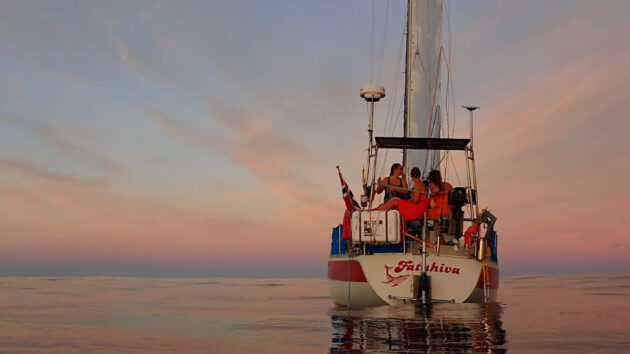
The Hero 114 has been described as ‘a long-distance sailor’s dream’ thanks to its robust construction and space-efficient design. Photo by Fatudiva
In addition to their nautical license, before departure Eva and Lisa had obtained an ICC (International Certificate of Competence); Eva got her Short Range Certificate for radio communication.
Amalie and Eva did additional medical courses, while Lisa completed an epoxy course.
But, ‘The bottom line is that everyone can do everything,’ Eva says.
Occasionally, this can even complicate the crew’s decision making: ‘We all have an opinion about everything.’
Learning on the go
While we at Yachting World would usually advise not putting out to sea unless you have covered every eventuality, the girls choose to adopt more of a learn-on-the-job approach.
‘When people ask us, how did you actually go through with this? We say, just go for it,’ Eva says.
‘You can’t leave knowing everything about your world. You just have to start. That’s the only way you actually leave the harbour at all.’
Photo by Fatudiva
‘Every time something breaks, we learn about a new element of the boat, because you have to understand how the construction works in order to fix it.
‘For example, we submerged our outboard engine after a rough landing on a beach in Tobago. When we tried to go out, our dinghy flipped and everything floated out. But hey,’ she laughs. ‘Now we know how to clean the carburetor.’
For technical advice, the girls turn to modern tools like YouTube and ChatGPT, which they consult for everything from repair questions to local advice.
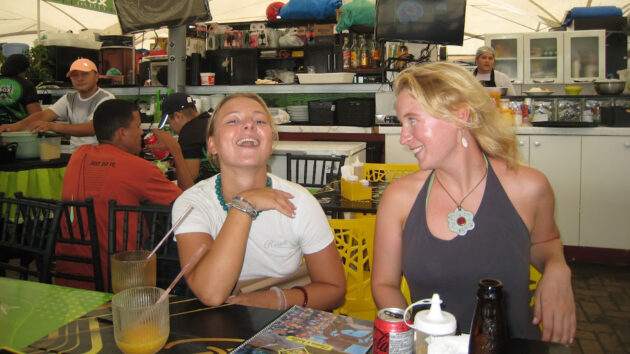
Photo by Fatudiva
They left home with ‘not the best tools,’ but quickly realised that asking for a loan often leads to conversation, and an offer of help.
‘That’s been one of the biggest lessons so far,’ Thelma says. ‘If you need help or advice, just ask someone.’
As most sailors across the Pacific are older, ‘When they see young people they think what we’re doing is cool, and want to support us. We feel very lucky, in that sense,’ Lisa adds.
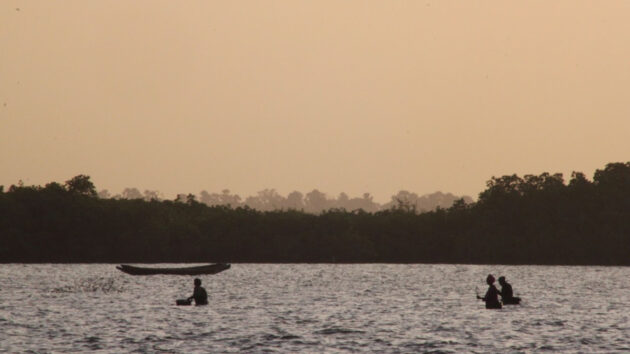
Photo by Fatudiva
Still, Fatuhiva‘s demographic occasionally raises a few eyebrows.
In Morocco, Senegal, and Gambia, ‘They hadn’t met anyone like us before. That was a really interesting experience.
The further we’ve gotten from home, the more we feel it, how surprised people are when they see us, and how much that reflects a cultural difference. But that’s just what sailing is all about,’ Thelma says. ‘Connecting people across borders and cultures.’
Even in the marina, ‘Sometimes people underestimate what we know. There’s an idea of jobs that are either ‘pink’, or they’re ‘blue’. A lot of times we’re asked, who does the engine?’ Eva laughs.
‘But yes, most the time other sailors are very nice, and offer their time and knowledge and tools to help us.’
Give, don’t gatekeep
Film from Fatuhiva‘s departure from Oslo in August of 2025. Photo by Fatudiva
Across their platforms, which they have recently started updating in English, the girls share photos and planning information.
Details like the criteria that guided their choice of vessel, the costs, preparation for, and practicalities of transit through the Panama Canal, and even their choice of insurance.
They offer resources for other young would-be sailors, replying enthusiastically to comments from peers wishing to undertake a similar journey.
‘We’ve been very inspired by other Norwegian women sailors [@medmotvind and @sistestoppsorgenfri] that left when they were very young,’ Lisa reflects.
‘The power of seeing other people find their voice and go on an adventure, it can make a lot of impact.’
They want to show that there are pathways into sailing even for those who weren’t raised in it.
Photo by Fatudiva
‘That’s the biggest motivation to keep sharing. It’s about showing what’s possible, but also showing people the reality, the ups and downs. Not just how perfect it can be.’
Still, they don’t want content creation to become a full time job.
They’ll keep doing video updates, ‘Only as long as it’s fun.’
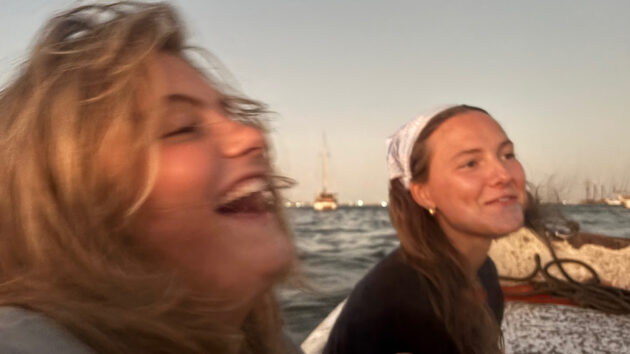
Photo by Fatudiva
In the meantime, Fatudiva channels double as a fundraising tool on longer crossings.
‘This journey has opened our eyes,’ they write in an instagram caption. ‘Freedom is a privilege. In many parts of the world, children are denied the very rights we often take for granted, like safety and education.
We believe in a future where every child has a seat in a classroom and a life free from fear.’
Having raised over 5000 USD for Plan International on their Atlantic crossing, they are now turning their efforts to Save the Children.
The future of Fatudiva
It’s a unique set of circumstances that led to this adventure, and the crew of Fatuhiva knows it.
‘We’re very lucky to have found each other.’
Looking back to the start of the journey, they recall, ‘Our families were a little scared at first, because we didn’t know what we were doing. Now they see how we’ve evolved. We know the boat a lot better and we know each other. We work very well together.
They’re very happy for us. A bit worried, still. And a bit jealous.’
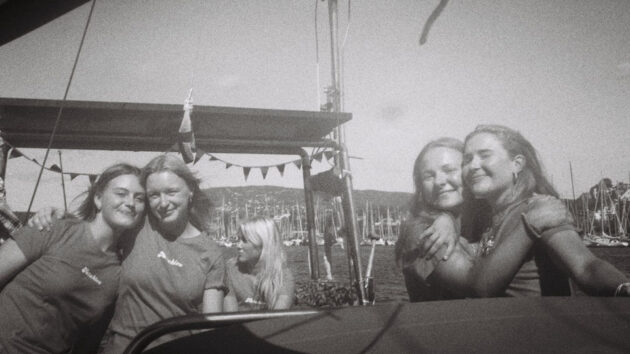
Film from Fatuhiva‘s departure from Oslo in August of 2025. Photo by Fatudiva
For now, the Fatudivas are excited to keep sailing, keep learning, and keep building community as they go.
Since hearing about another all-female boat along their route, ‘We’ve been trying to find them.’
Their ambition is to sail all the way around the world and back to Norway over a period of three years, a feat which would make them the youngest Norwegian crew and first all-female crew from Norway to do so.
If the future of sailing is a bunch of twenty year old girls sailing around the world with their best friends, it’s bright.
If they’re even half as spirited, savvy, and self-aware as the Fatudivas, the kids are going to be alright.
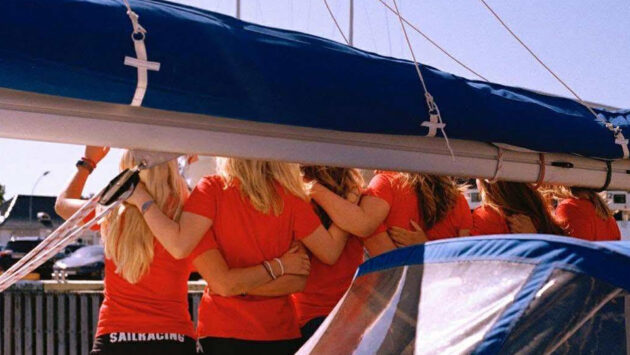
Film from Fatuhiva‘s departure from Oslo in August of 2025. Photo by Fatudiva
Tips from the Fatudivas
Get real life inspiration to get into sailing
‘Talking to people is the number one thing you need to do.
Looking on Instagram is okay, but for people who don’t sail, getting in contact with somebody who can actually help you and inspire you is fundamental,’ Eva says.
Go with the flow
‘In today’s society, things are very rapid and over-planned. But that’s not sailing at all.
You follow the weather, you follow your projects, you have to be flexible and have patience.
We’ve started to live by the motto that ‘plans are only suggestions,’ because you can make as many as you’d like, but at the end of the day so many factors are out of your control. You just have to keep adapting to how things turn out.’
Stay alert
‘We’ve been told, ‘if you don’t have a project going on, you’ve just missed something. There’s something you haven’t seen.’
And it’s true, although you can’t take on everything at once. You just have to take it step by step.’
 If you enjoyed reading about the Fatudivas….

Yachting World is the world’s leading magazine for bluewater cruisers and offshore sailors. Every month we have inspirational adventures and practical features to help you realise your sailing dreams.Build your knowledge with a subscription delivered to your door. See our latest offers and save at least 30% off the cover price.
Note: We may earn a commission when you buy through links on our site, at no extra cost to you. This doesn’t affect our editorial independence.