




The Caribbean offers fascinating sailing grounds far beyond where most sailors venture. Janneke Kuysters on where to go for a true tropical adventure
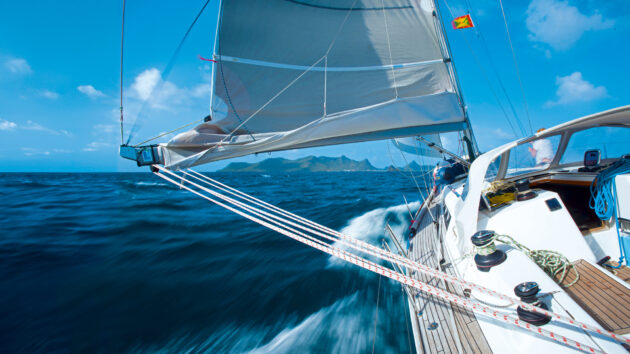
Seen one Caribbean island, seen them all? Not at all: the region offers amazing diversity, from incredible habitats to vibrant cultures. For many cruisers the Caribbean is an extended stopover destination – a delightful cruising ground for one season, often en route from Europe to the Pacific, or as the highlight of the Atlantic Circuit. But if you look closer, there are many opportunities to stay longer.
The hurricane season from June to December effectively cuts the Caribbean cruising year in two, between blissful sailing in winter and spring, and the need to store your yacht in a safe place for six months. This is when many cruisers either fly home or travel inland to memorable places within reach, for instance Central or South America.
The six safe cruising months can be used to explore the Caribbean in depth. If you do it clockwise you make the most of the prevailing wind and current.
While the Caribbean is renowned for short passages between islands, the whole sailing area is surprisingly large: to complete the full ‘circle’, you’d need four seasons. The geography of the region means you can make as many shortcuts as you like, or you could use each year to explore the four cardinal directions of the compass: east, south, west, north.
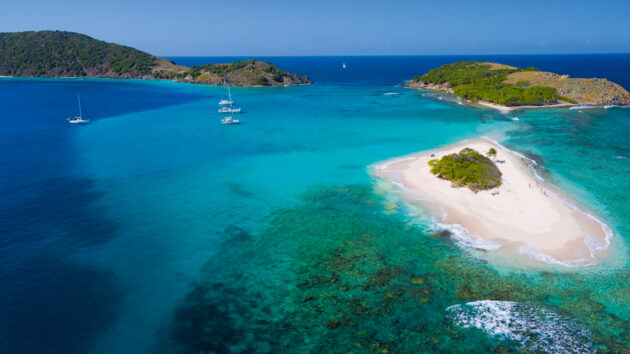
Sandy Spit near Green Cay, British Virgin Islands. Photo:Christian Wheatley/Getty
Eastern arrival
There is nothing better than making landfall at a Caribbean island after crossing the Atlantic Ocean. Typically, yachts arrive in December or January and have five months available to explore the nearest island chains.
If you plan to cruise for multiple seasons in the Caribbean, it pays to aim for a destination further north in the Leeward Islands. Making Antigua your first stop and dropping the anchor in the sheltered Falmouth Harbour or English Harbour is a moment to savour. After celebrating your ocean crossing and exploring the island, you can either go north to Saint Barth, Sint Maarten or Anguilla or you use the prevailing east/north-easterly winds to carry you south to the other Leeward and Windward islands.
In winter, the north-east tradewinds blow with regularity and the days and nights are pleasantly warm. In summer and autumn, the tradewinds get lighter, but the threat of hurricanes increases.
There are many options to choose from as you sail south. Machiel Hermans and Liselotte Goddijn cruised their Root 51 Pitou extensively in the Caribbean.
Palm-fringed beach. Photo: imageBBroker/Alamy
“All the islands are different and each has its own unique character. We love the French islands, because of the culture and the culinary delights. Nothing beats eating a delicious croissant for breakfast under a swaying palm tree,” Liselotte says.
Machiel adds: “The Caribbean is a windy place, but if you keep a keen eye on the weather forecast you can make beautiful and comfortable passages.”
At the southern end of the Windward Islands, Trinidad and Tobago offer many options to store your yacht for the hurricane season.
Some adventurous cruisers head even further south-west to Suriname, the smallest country in South America, where you could wait out hurricane season inland up the Suriname River. But be aware, visiting sailors have reported that there are little to no facilities for parts or repairs, and paperwork can be cumbersome.
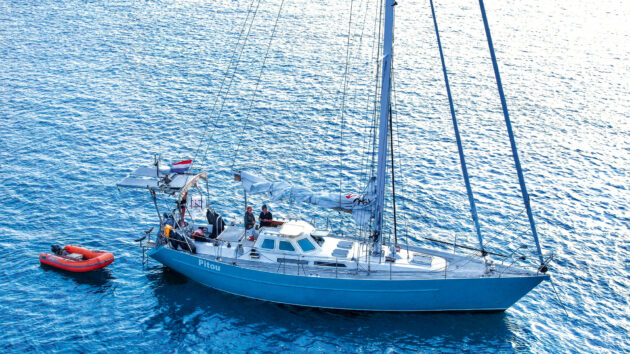
Machiel Hermans and Liselotte Goddijn have cruised the Caribean in their Root 51 Pitou. Photo: Machiel Hermans
Staying south
Typically many cruisers head south to avoid the hurricane belt, which means the second year of an extended Caribbean cruise could be spent exploring the south Caribbean Sea. Alan and Terry Ryall cruised their 50ft Island Packet Seminole Wind for 12 years in the Caribbean. Alan recalls: “Sailing from Grenada to the Dutch ABC islands (Aruba, Bonaire, and Curaçao) is delightful. It’s a downwind sail and with the help of the strong west-going equatorial current, we made excellent speed.”
Terry adds: “The three Dutch islands are very different. The diving and snorkelling around Bonaire is incredibly beautiful. To protect the coral, you can’t anchor there. The available mooring balls are situated just at the dropoff, so you literally jump off the back of the boat for the most amazing underwater vistas.”
Article continues below…
Curaçao is the largest of the three and, apart from the quaint pastel coloured buildings, has good facilities for visiting cruisers. In the Spanish Water natural lagoon, many yachts anchor in sheltered conditions or haul out for the hurricane season. Aruba is delightful as well, and despite a lot of tourism on the island there are still authentic places to be found. Machiel Hermans notes: “There are excellent yacht storage options on Aruba, both in water and on land.”
From Aruba it’s just 250-300 miles to the South American mainland and Colombia. Despite the country having a – perhaps unfair – reputation for being unsafe, many cruisers report it to be a fascinating and attractive destination, with diverse ecosystems and culture.
The old walled city of Cartagena is a highlight for many cruisers, as well as Santa Marta, where the yacht can be left for some inland travel as well. Passage to Colombia from the ABC islands can be rough, especially when sailing closer to the coast in shallower water. There is the option to stop in Colombia and store your yacht for the hurricane season in Santa Marta or Barranquilla, or continue westward toward the San Blas islands and Panama, where there are also storage options in Shelter Bay Marina.
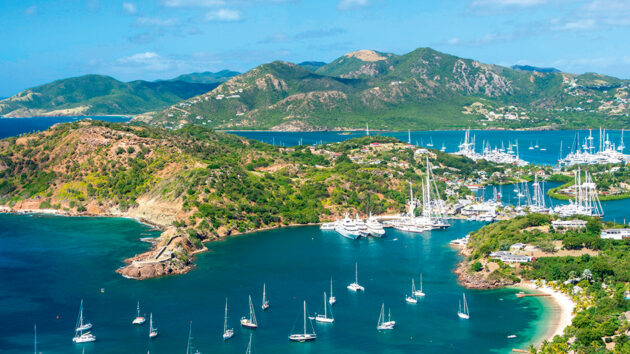
English Harbour, Antigua. Photo: Greg Balfour Evans/Alamy
The west-bound passage to Panama is best made when summer approaches, by April or May, as the tradewinds are not as strong and the downwind passage can be made more comfortably. In winter, the tradewinds are at their strongest and large seas can be expected on the way west.
On the way to Panama the idyllic Guna Yala, or San Blas islands, are a must-see. The indigenous Guna people are very welcoming of cruisers to their islands and keen to share their culture. “The Guna are hunter-gatherers and it is fascinating to see how they forage in their dug out canoes,” says Terry Ryall.
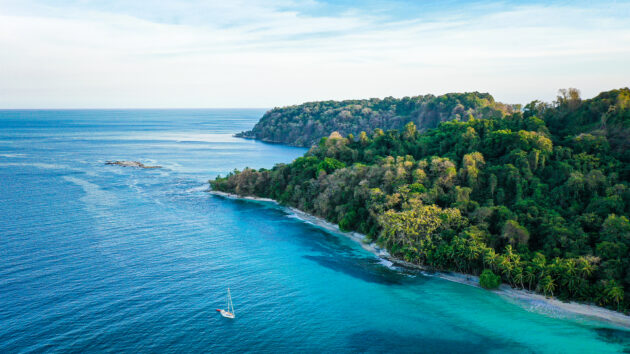
Coiba National Park, Panama. Photo: Max Campbell
Western adventures
The western Caribbean offers some lesser known cruising areas, with many countries in Central America blessed with beautiful nature, interesting cultures, hospitable people and delicious food. The many reefs, islets and shoals that dot the coast can make for interesting navigation and many places to drop their anchor.
The prevailing wind tends to be more north than north-east along this coast. However, the influence of land- and sea breezes can help yachts make progress when sailing northwards against the tradewinds.
Terry and Alan have spent many seasons exploring the western Caribbean. “First, it’s far less crowded and commercial than the Windward/Leeward islands, and we find there’s much more contrast and variation in terms of scenery and culture,” Alan explains.
“Second, we find it safe and welcoming: there is far less hassle. And cruising budgets stretch much further here – the value for money is incredible.”
In Panama, the Chagres River is an interesting stop; but most cruisers go to the Bocas del Toro archipelago, near the border with Costa Rica.
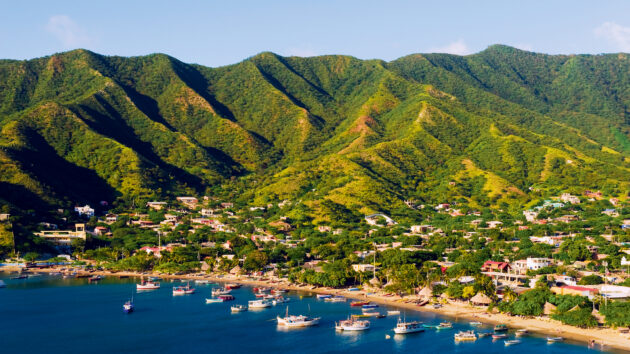
Caribbean coast of Colombia, South America. Photo: Christian Kober
The lack of port facilities and limited anchoring opportunities in Costa Rica lead many cruisers to visit the country by land with the boat safely tucked up in Shelter Bay, Panama.
“The Colombian Islands of Providencia and San Andreas are a great stop off north of Panama: they are around 100 miles to the east of Nicaragua and well to the south of the shallow banks at the northern tip of Nicaragua,” says Alan. “There are reports of Nicaraguan drug smugglers using the fishing camps on the small islands in the banks so it’s wise to take an outside route and avoid the inner channels.
“From there, it’s not that far to the jewel in the crown of this area: the Bay of Islands of Honduras. There are three different islands, which are all very different.
“The friendly people, the fascinating coral which you can explore either diving or snorkelling, the facilities for yachts – it’s just a wonderful place where many cruisers linger longer than expected.”
Off the coast of Belize, the natural wonders are also renowned – particularly the diving along the Mesoamerican reef, the second largest barrier reef in the world. Belize has attracted some small-scale charter yacht fleets, but the cost of permits for visiting yachts is much higher than other countries in the region.
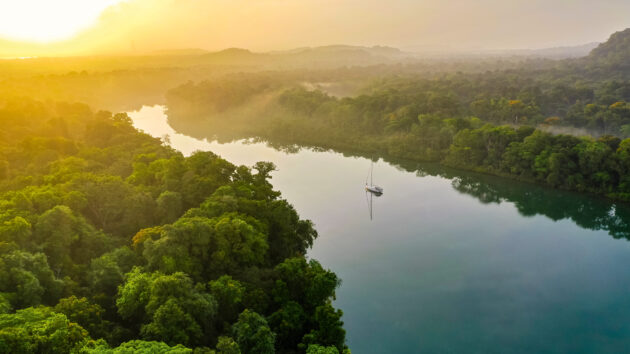
Spectacular isolation in Panama’s Rio Chagres. Photo: Tor Johnson
Continuing north allows you to explore the coast of Mexico. Beyond the overdeveloped tourism of Cancun, the Yucatan peninsula has interesting and historic places to offer. The Yucatan Channel has a reputation for confused seas thanks to the many currents coming from different directions: the Yucatan current flows from the north, the Gulf Stream flows from the south into the Gulf of Mexico, while prevailing easterly winds and tides push in from Cuba.
For hurricane season, a widely recommended option is to go to the Rio Dulce in Guatemala, a long, winding river which widens in a few places to create sheltered lagoons – the largest a spot where yachts assemble in the hurricane season. Terry: “Our boat has a relatively shallow draught. Boats of up to 2m can get over the bar to get into Rio Dulce. Deeper draught boats may look for hurricane season storage in Panama (Shelter Bay).
“There is a big freshwater lagoon in the middle of the jungle. No hurricane has ever passed there. We’ve spent five hurricane seasons in Rio Dulce and call it a ‘sticky place’, because once you’ve discovered it, it’s hard to leave. There are several first class boat yards for haulouts and refit work. The quality of the workmanship and the low prices are very attractive.”
Brent Grimbeek and Ana Hill, seasoned circumnavigators on Impi, a Lagoon 440, are currently in Rio Dulce: “There is a large social network between cruisers here, with lots of organised get-togethers and trips. Many restaurants and bars make for a lively atmosphere,” they report. “And the jungle is incredible: we spotted hummingbirds nesting in front of our eyes, there are toucans and in the water the odd dugong cruises by.”
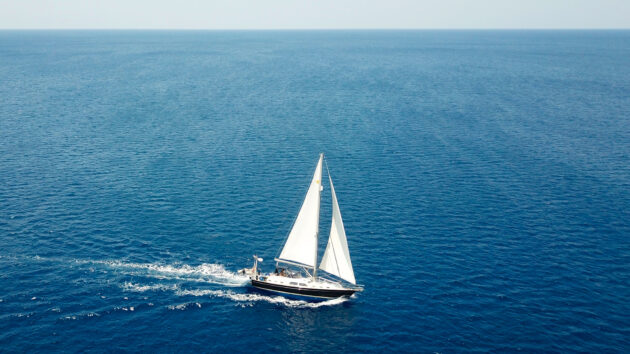
Alan and Terry Ryall sail the 50ft Island Packet Seminole Wind. Photo: Alan Ryall
Northern Antilles
If you have a fourth year to explore the Caribbean, or want to stay further north, you could spend a season in the Greater Antilles, before heading back to Europe in spring – or exploring the Gulf of Mexico or the US east coast.
Cuba, the Cayman islands, Jamaica, Dominican Republic and Puerto Rico are larger islands that affect the local weather conditions due to their height and position. The land breeze at night counters the tradewinds, giving calm conditions. Sailing west from Central America inevitably means a lot of upwind work, but you can track south of the islands to get shelter from wind and waves as you go along, with many stops that can be made underway. Alternatively, passing the islands on the north side gives the advantage of east-going Luperon current.
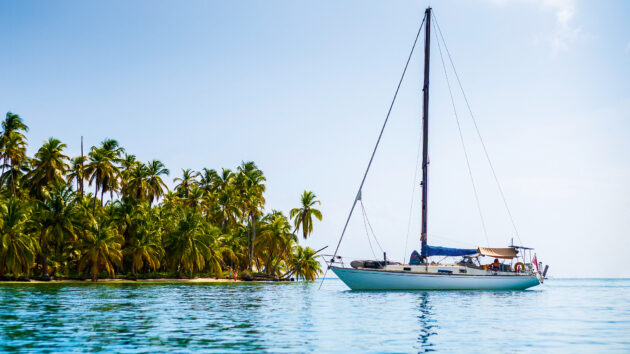
Guna Yala in the San Blas islands of Panama. Photo: Max Campbell
Both the northern and southern coasts of Cuba are interesting to visit, and between the reefs and shoals offshore there are many secure anchorages. The Bahia de Jagua on the south side has a marina, where you can moor your yacht to explore inland. Just south of Cuba is Jamaica. Near the capital Kingston the Royal Jamaica Yacht Club offers a warm welcome to cruisers.
The Dominican Republic has long been a favourite for cruisers, especially in the large Luperon Bay in the north or Samana in the north-east, which are both ports of entry. And the last stop for many before returning to Europe is the lovely island of Puerto Rico. You could opt to just stop in the capital San Juan, but if more time is available a cruise along the south side of Puerto Rico offers great anchorages. On the east side of Puerto Rico is the large Marina del Rey, where your yacht can be moored for provisioning and clearance for the long passage to Europe.
 If you enjoyed this….

Yachting World is the world’s leading magazine for bluewater cruisers and offshore sailors. Every month we have inspirational adventures and practical features to help you realise your sailing dreams.Build your knowledge with a subscription delivered to your door. See our latest offers and save at least 30% off the cover price.
Note: We may earn a commission when you buy through links on our site, at no extra cost to you. This doesn’t affect our editorial independence.